AI was already inside the building. Employees were experimenting with public tools. Sometimes with sensitive information. Meanwhile, a custom GPT was being built for 2.4 million users, but the conversation was almost entirely technical.
Client
Australian Government
Year
2025
Deliverable
An AI platform launch for over 2.4M employees

Info
There was no positioning.
No shared narrative.
No behavioural adoption strategy.
In a system already perceived as slow and behind in technology, launching a new AI platform without clarity would would amplify hesitation and risk losing more trust in leadership.
Within 3 months
Executive stakeholders formally backed brand and communications as critical infrastructure
A scalable positioning and messaging framework was built and launched
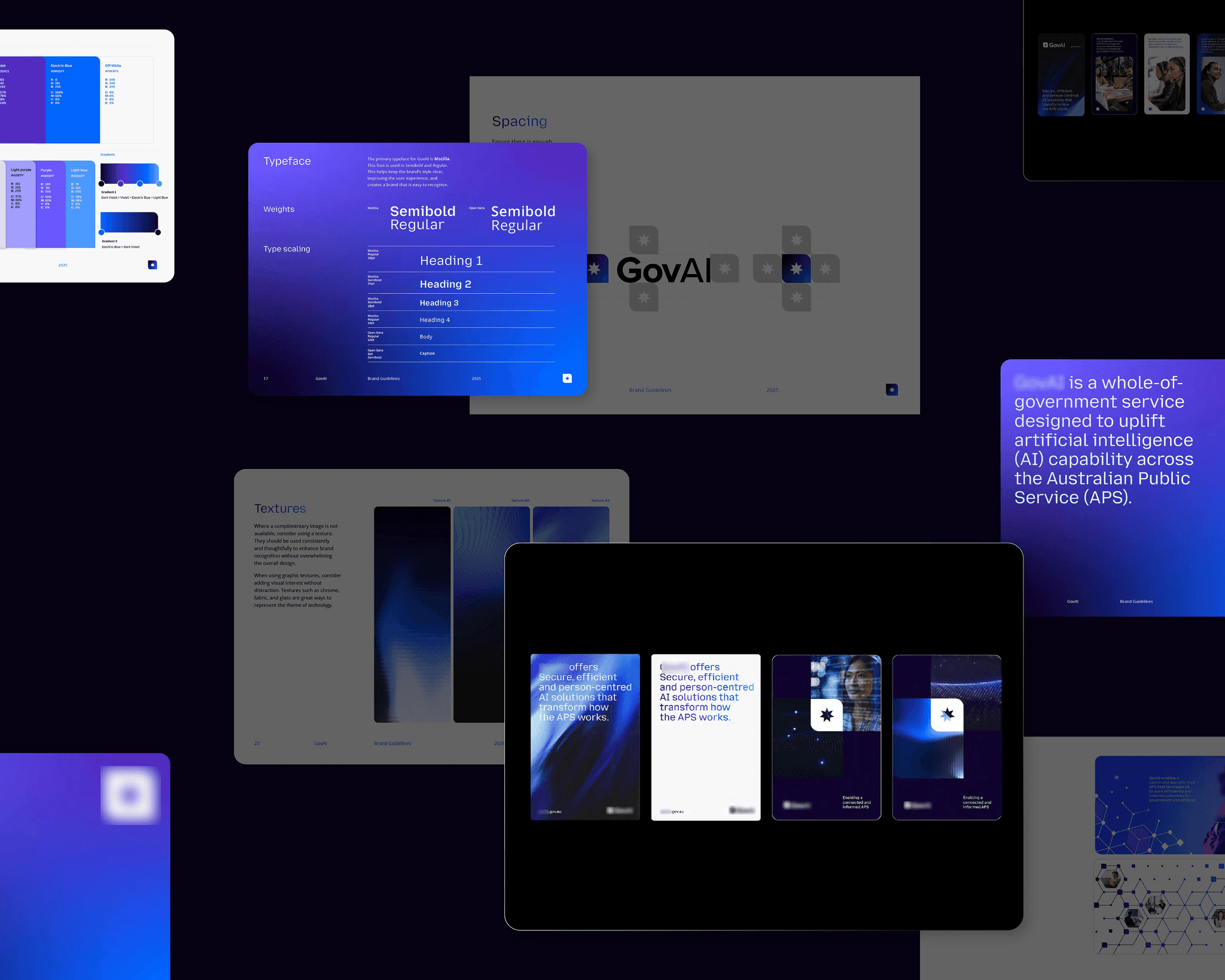
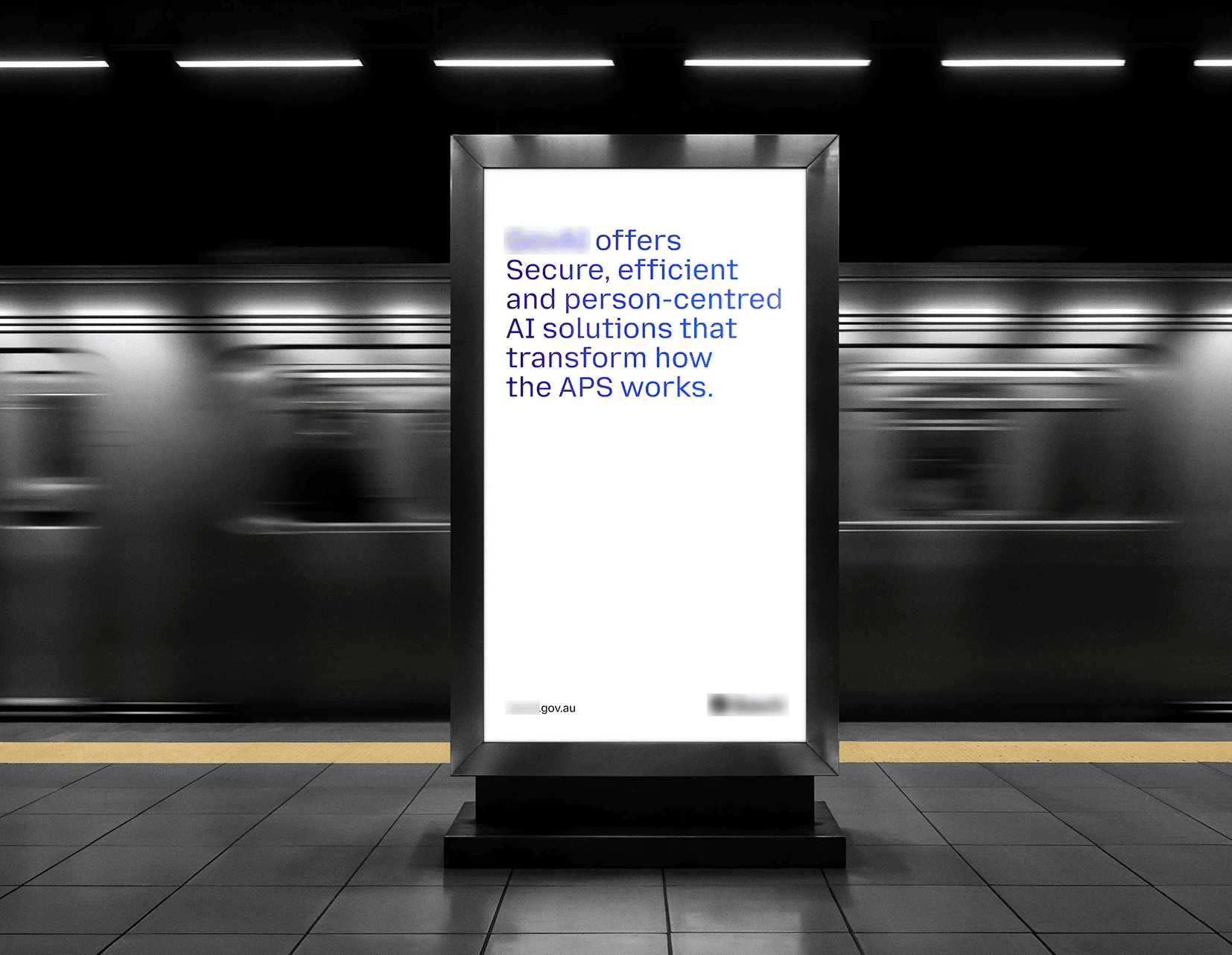
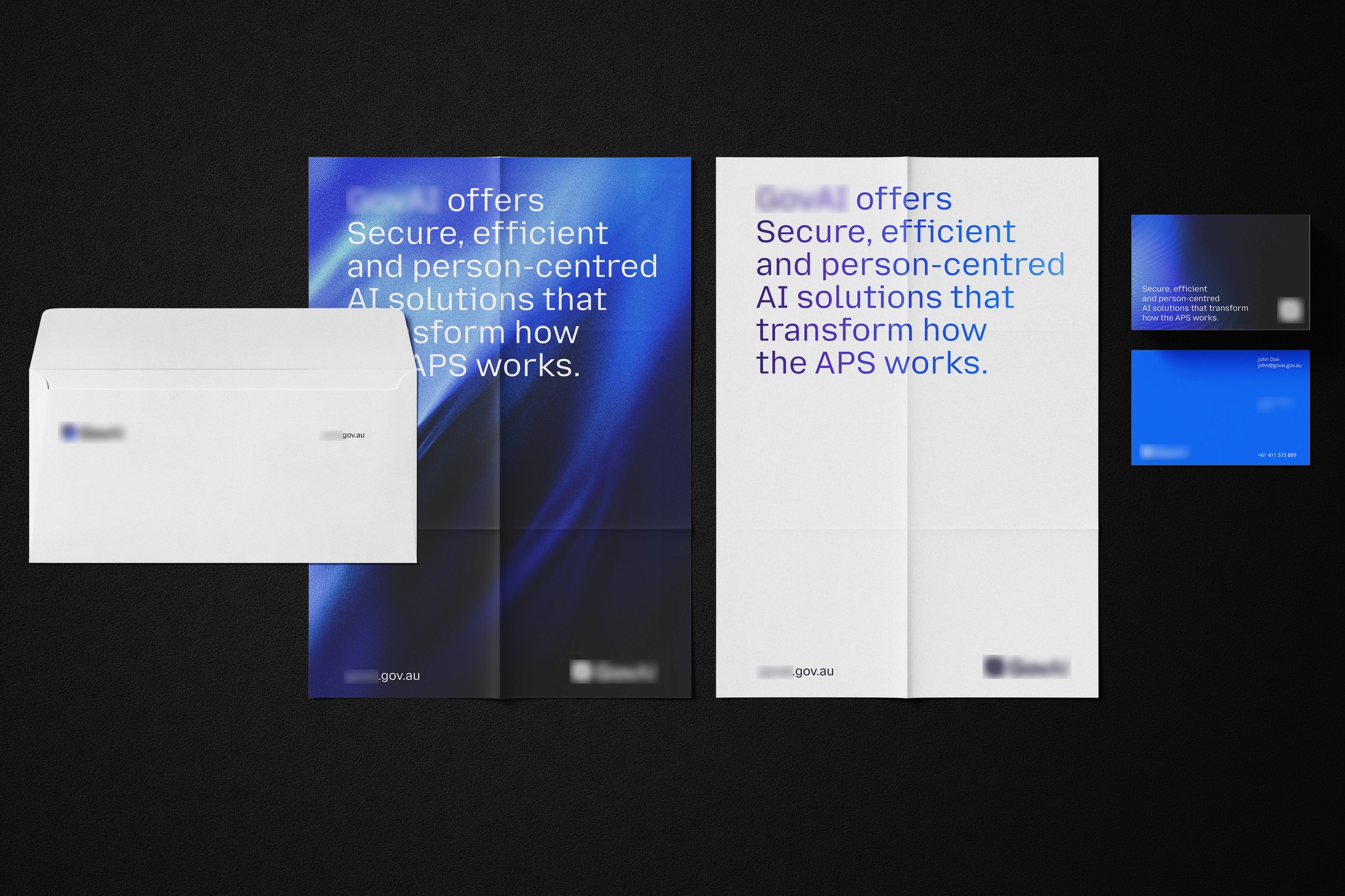
3x modular brand templates were developed to reduce reactive requests
Approximately 3hrs per week saved for the brand team
A phased internal rollout model designed to support behavioural adoption
The initiative shifted from being a technical release to a behaviour change program.
How It Changed
As the sole Brand Strategist within a cross functional team of UX designers, communicators, and executives, I focused on the adoption barrier before launch.
The insight was behavioural.
People were not resisting AI because they lacked access, they were resisting because they lacked psychological safety and clarity.
So we reframed the tool from experimental technology to trusted workflow ally.
We built:
A positioning narrative centred on empowerment and responsible use
Messaging to reduce fear and increase confidence
A communications framework to guide adoption
Repeatable templates to enable scale without operational strain
The goal was not awareness, it was responsible usage and confident integration into daily workflows. The brand became the infrastructure that made the technology usable and adoptable.
Lasting Impact
Before pilot launch, the organisation had executive alignment, shared language, and a scalable communication system. The product did not enter the market as another government tool. It entered as a trusted alternative to unsafe external platforms. Trust preceded technology.
Credit
Project Lead: Amanda Dennett
Brand Strategist/Creative Lead: Stephanie Dempster
Strategic Communications Lead: Ella Hourigan
Behavioural Lead: Melissa Sotheran